Earth Suits For A Warming Planet
Making an "earth suit" / habitat suit to survive in high temperature and humidity environments.

If you have been reading my stuff, you know of my obsession with climate change and how we will have to change to survive a warmer world. One thing I saw was the concept of “wet bulb” temperature, specifically in areas that are hot and humid.
What is Wet Bulb Temperature and why does it matter?
The wet-bulb temperature (WBT) is the temperature read by a thermometer covered in water-soaked cloth (wet-bulb thermometer) over which air is passed. At 100% relative humidity, the wet-bulb temperature is equal to the air temperature (dry-bulb temperature); at lower humidity the wet-bulb temperature is lower than dry-bulb temperature because of evaporative cooling.
Human beings keep cool (and alive) by sweating. We sweat, which evaporates and cools our bodies. There is, however, a combination of heat and humidity that will be so saturated with water and heat that a person’s sweat stops cooling the body. This leads to heatstroke and eventually death. This is obviously really fucking bad. At first climate scientists expected to see deadly wet bulb temperatures in the mid 21st century, somewhere between 2040-2060. From current climate models, this will come way sooner, and deadly wet bulb temperatures have already been recorded.
In the current warming trends, the timelines are accelerating, and with more changes to come, we could be seeing these conditions pretty soon, possibly in the next decade.
Space Suits On Earth So We Don’t Die From Heat Stroke
So we will not be able to stop the earth from getting warmer, and there are places on the planet that will be so hot and humid that people will die being outside for prolonged periods of time. We need to create systems that will cool people or help in the evaporation of sweat to raise the threshold at which humans can survive. This article is not exactly a foolproof idea, and I bet smarter people who have experience making suits to survive harsh environments (NASA and other space exploration groups) are already thinking this. But their suits are custom-made, tailored, and extremely expensive. So how would the average person be able to go outside and not die? Habitat suits.
The suit has to meet a couple of conditions:
- Lower the effects wet bulb temperatures would have by aiding in the evaporation of sweat.
- Be somewhat affordable. (The suits NASA and firefighters use cost more than an average American's yearly salary)
- Not use crazy materials that require any special facilities to manufacture or source.
- Be able to be mass-produced at scale.
Cooling suits exist, but are super expensive or don’t work all of the time
Looking at NASA, they use water cooling suits in their spacesuits. It’s basically a custom bodysuit lined with tubing and an external pack cools and pumps the water around the wearer to cool them.
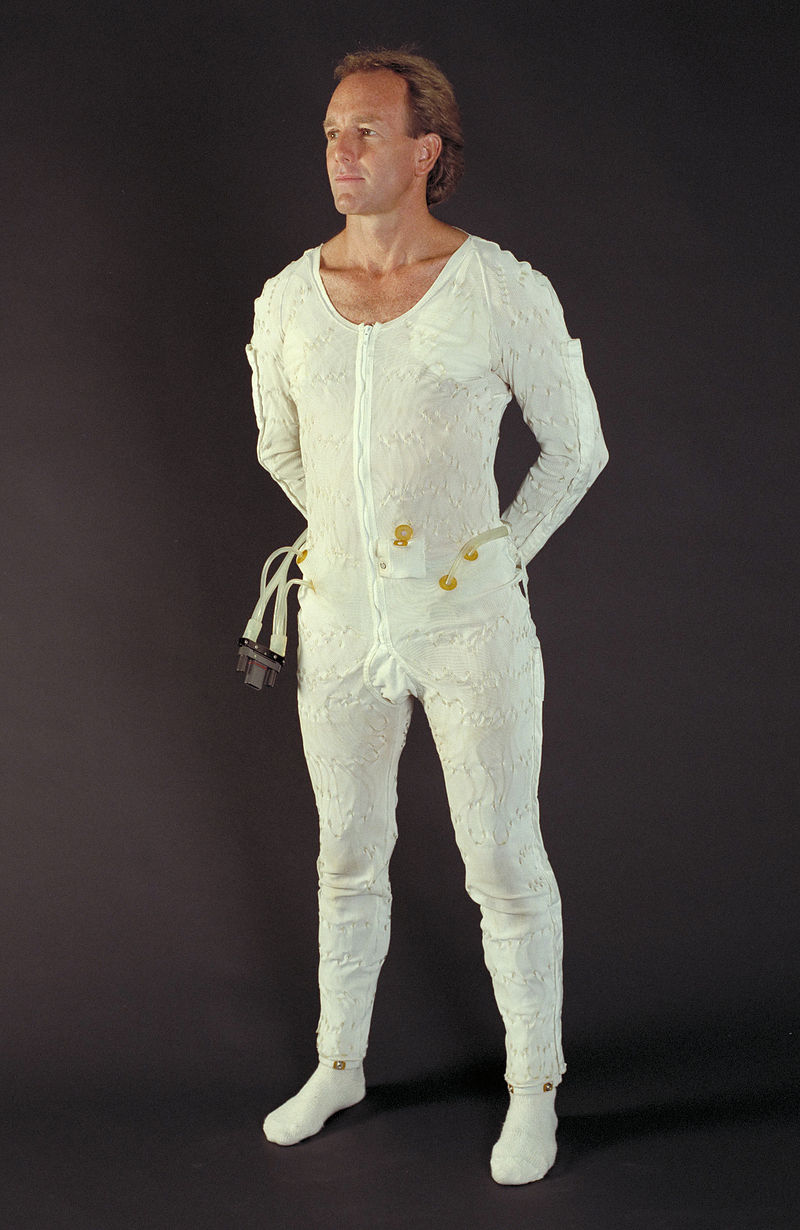
Perfect! But these systems are so expensive that you have to go through manufacturers who don’t even list the price. Something like this would be pretty hard to get to most people.
There are smaller cooling vests that run on the same concept that you can buy from Evil Corp™ (Amazon). These are still expensive, however, coming in at $270 USD, and they only cool the torso, and don’t help in evaporating sweat off the body.
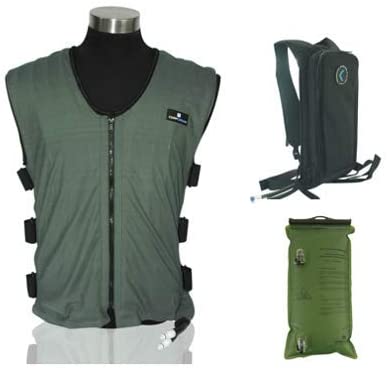
Another critical flaw, this vest runs off ice water. Which, in a normal situation in a developed country, would be easy to find, but in emergencies, in the field, literally anywhere there isn’t electricity and an ice machine, and you are screwed.
Air Suits and Thermoelectric Cooling
Aliexpress sells a pretty wide variety of air suits meant for construction. The full suit comes in at $60 USD for what looks like a US XL.
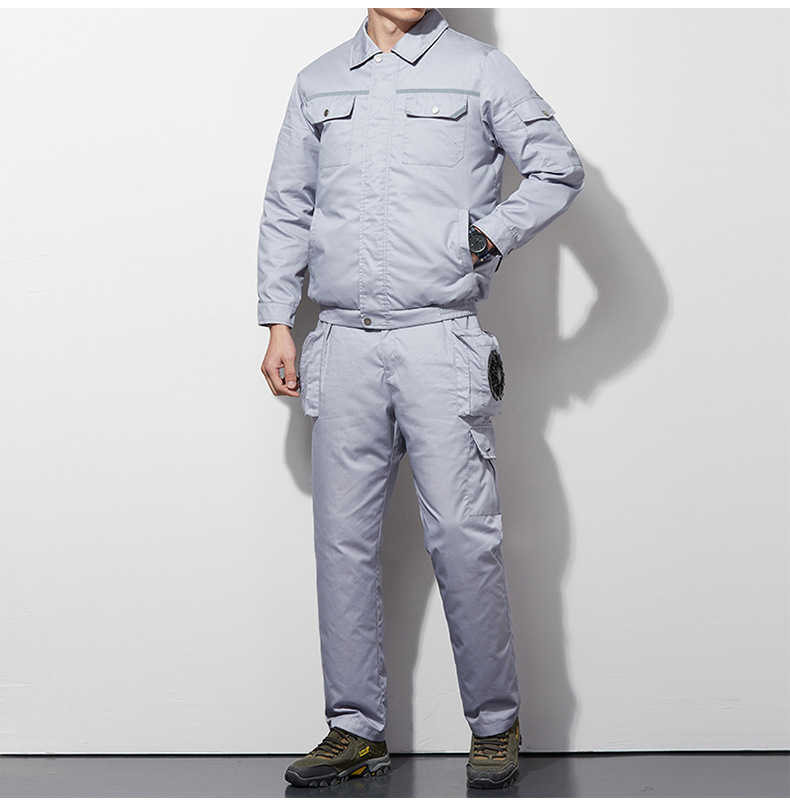
So far, it meets the cheap and evaporative qualities we are looking for. This would, however, be hot in a hot environment, and cooling the air coming into the intake could help with being comfortable and also aid in evaporation by helping remove some humidity before it enters the system. I intend to test this by just wearing it in Texas (It is super hot and humid here) and putting it through some rigorous tests, like going to a sauna with high temperatures and humidity, and measuring my body temperature and wet bulb readings. Working in Cybersecurity, I have learned that in order to say something works, you need to actually test it in the environment it will be used in, and also see firsthand how it is to actually do the thing.
So this can be improved by cooling the air going to the intake, thermoelectric peltier modules use electricity to get down to crazy cold temperatures. This removes the need for stuff like ice, which you may not have easy access to. These modules are also low power, you can run multiple off a small portable power bank.
Air-cooled hab suit to not die in a warming climate
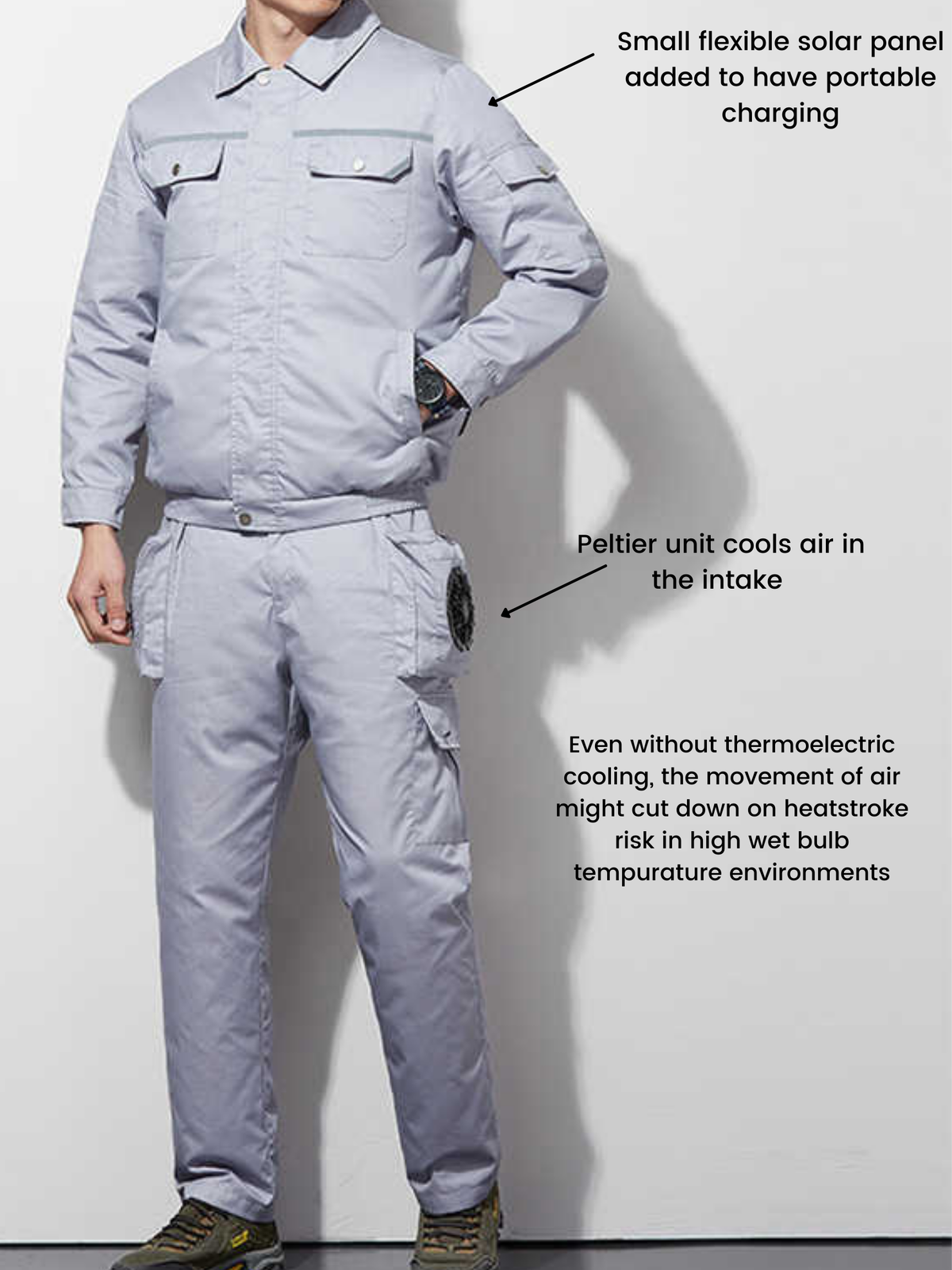
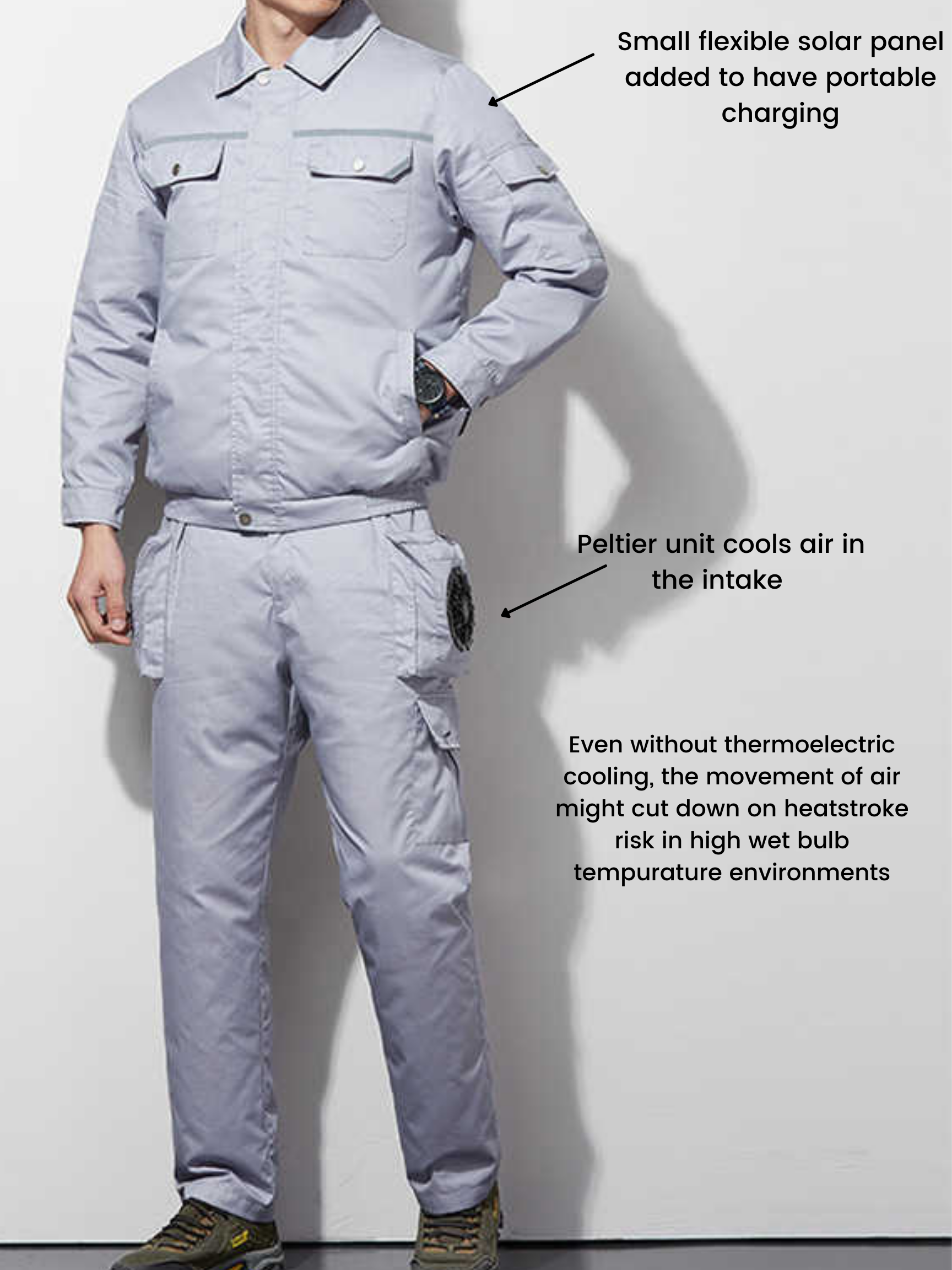
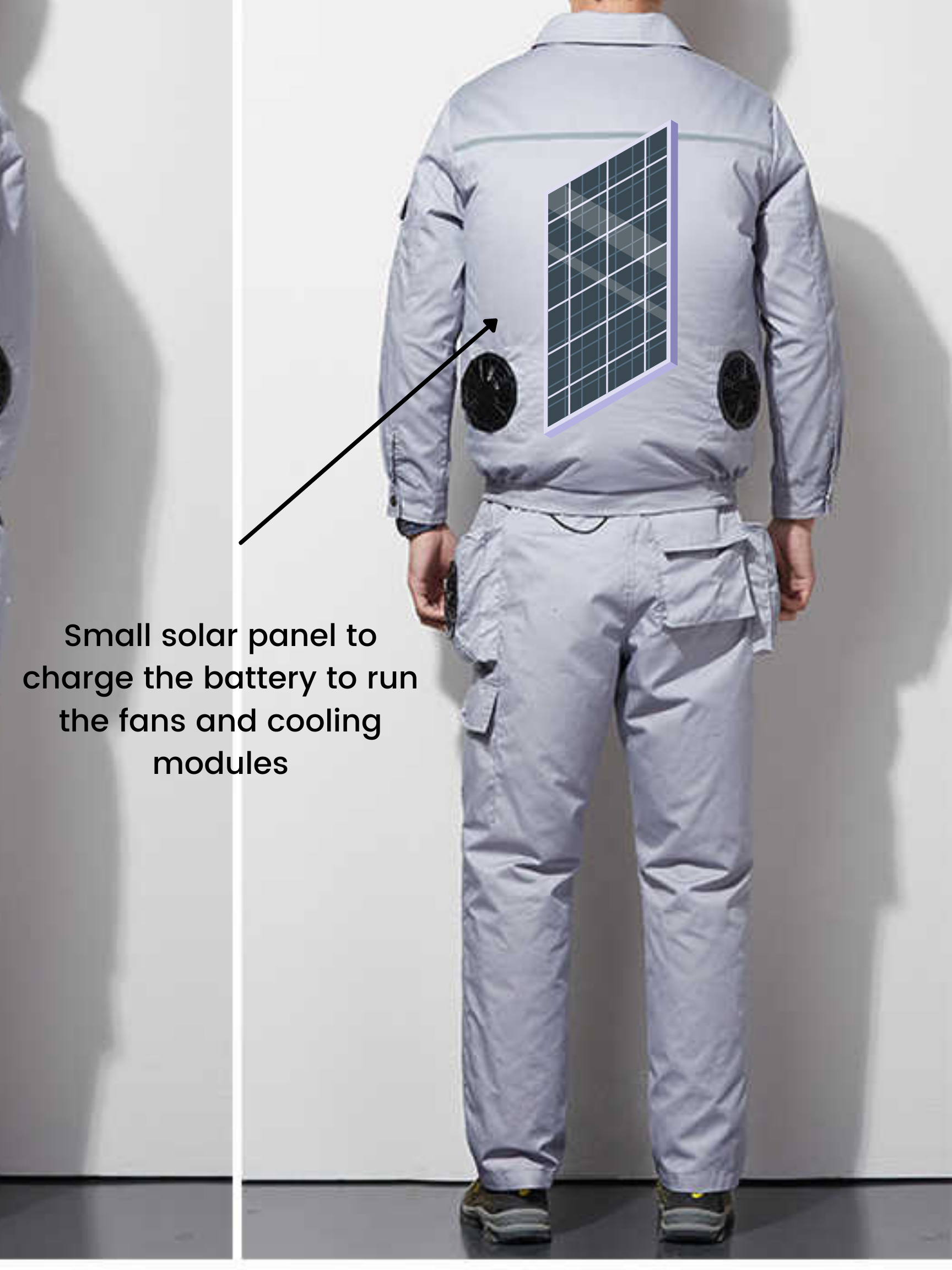
Ok, great, so we can use the air-cooled suit as a base and build on top of that. Flexible solar panels can be attached with velcro to the back and will help keep the battery banks that run the fans and peltier modules charged. The Peltier units will cool the air coming into the intake, and the suit will help move air around the user, aiding in evaporation and helping to cool the user. These two factors should allow a person to survive extremely dangerous wet bulb temperatures when without air flow, they would die.
This is not perfect, but a step in the right direction
This is a very experimental idea. I don’t know how well it will work or if it will be a smashing success. Regardless, we don’t have a lot of time to waste.
If it does work and I can stay alive in some crazy conditions, I may add sensor arrays to the system to automatically kick on the cooling if the temperature and humidity reach a certain range. Possibly add warning systems that would monitor the user's body temperature and if it gets too high, send a push notification to get help. With rising temperatures, wildfires, and pollution, air purification might be needed at some point. Not sure, but that's for a later time.
Keep ya posted.