Our Resistance Will Become Our Persistence
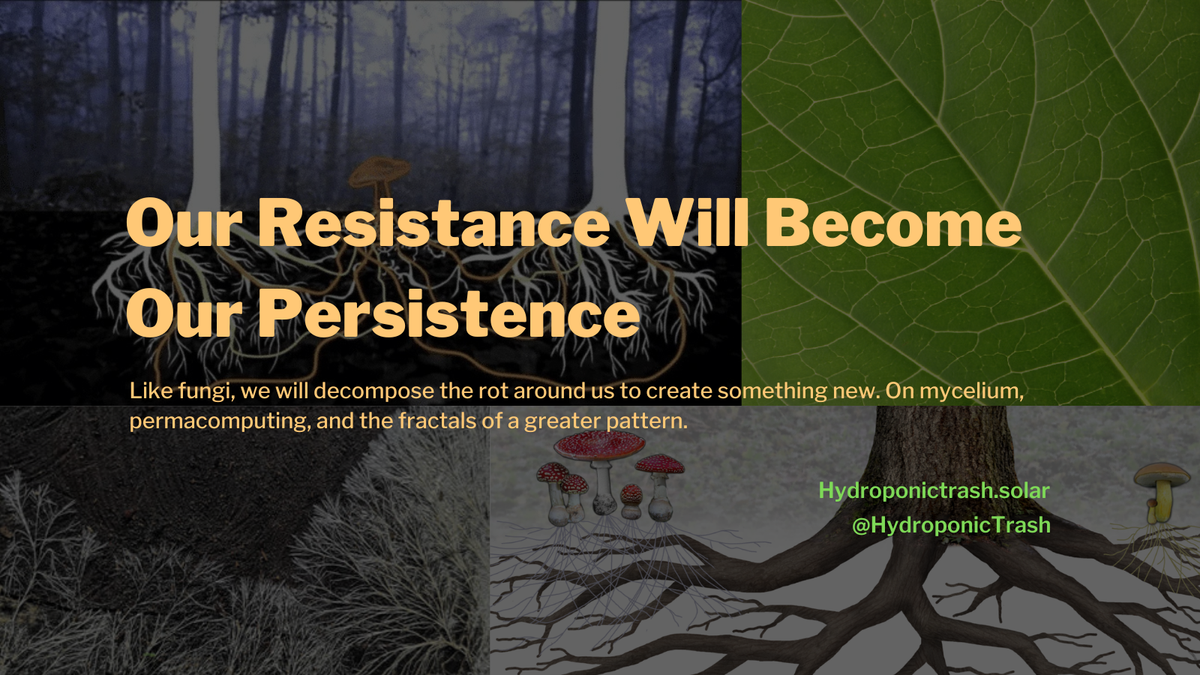
Like fungi, we will decompose the rot around us to create something new. On mycelium, permacomputing, and the fractals of a greater pattern.

My last post was written right after the 2024 election. As we all saw the storm approaching on the horizon, we all had an idea of how bad things could get - how bad things might get - how bad things would get - with no true idea of how bad things would be in reality.
Suspended in limbo, watching the inevitable come towards us, bracing, preparing, reeling, crying out in terror, ignoring the problem altogether, and some of us giving up when the wake started to hit the metaphorical shore. And now, we have seen the storm come, and in many ways, things are worse than we imagined. In other ways, they are exactly as they said they would be, line-by-line enactments from Project 2025.
 HydroponicTrash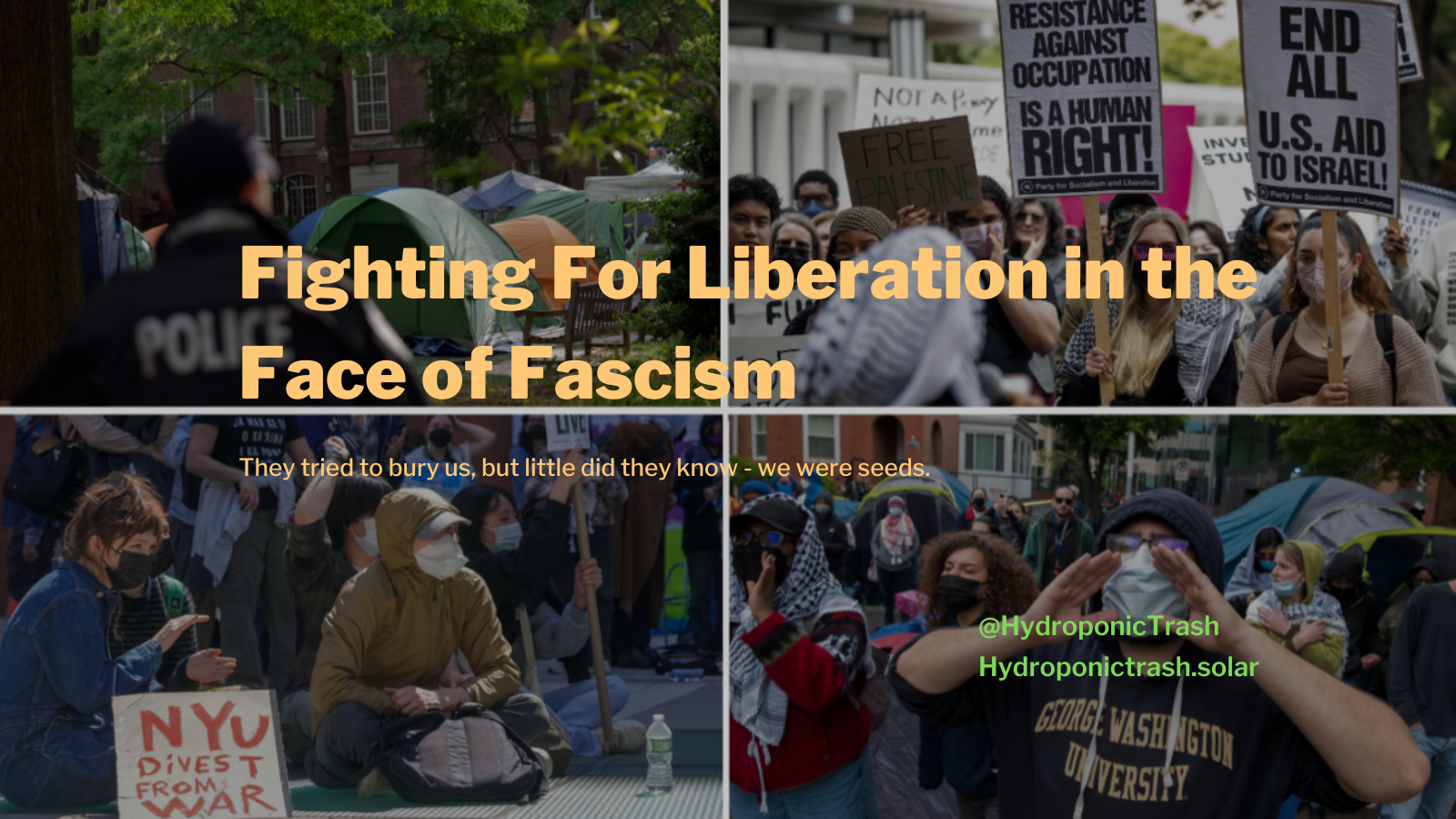
I do not doubt that, like me, you have also been watching things happen, with each hour passing bringing a new horror. I don’t think I need to explain what is happening; you already know. I doubt you need another person telling you about the horrors happening at this moment and the bleak future we are looking towards.
But as with the natural world, life moves towards death, just as every system, empire, economy, and tyrant decays. Eventually, they rot. Where there is death, there is life; natural systems rely on death, rot, and decomposition to move energy towards life. Where there is despair, there is hope because, like life, hope uses the energy from death and despair to make something new.
It’s within this rot, this destruction, this collapse, where the metaphorical fungi will flourish. It’s in the decay that the energy of the rotting system will be used to grow something new.
Mycelium, decay, and energy entropy
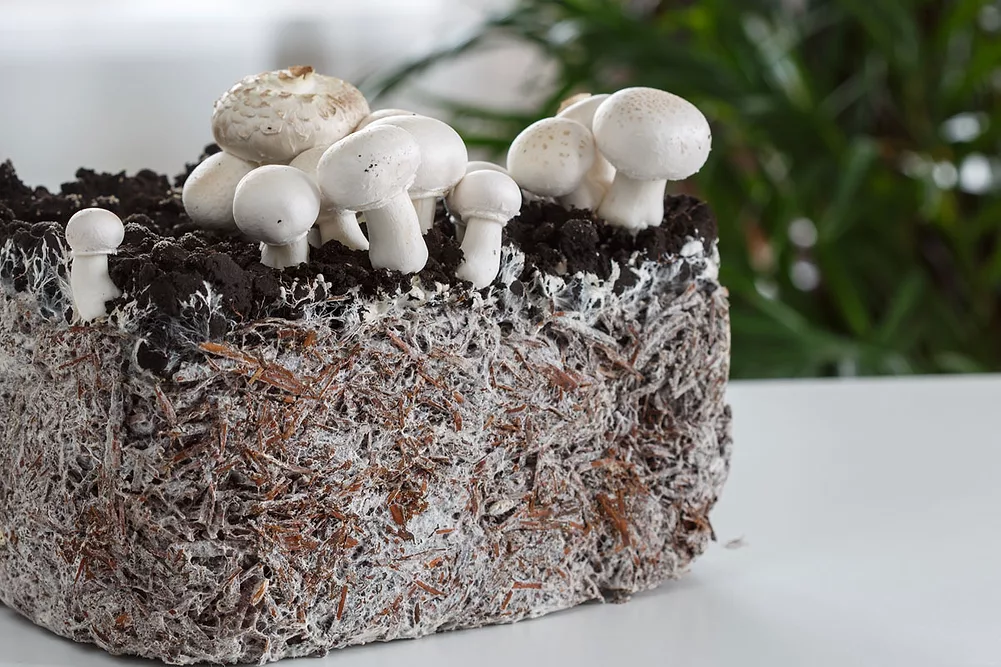
Mushrooms are actually how some types of fungi reproduce; they spread spores that replicate the underlying mycelium - which is the network formed by the fungi and can be thought of as the “body” of the fungi. This network is an interconnected one, and there are multiple types of fungi that play different roles in the ecosystem.
Parasitic fungi require a living host to survive, stealing food from the host; saprophytic fungi live by breaking down dead organic matter and recycling nutrients; mycorrhizal fungi form a symbiotic relationship between the mycelium and the roots of host plants. mayneconservancy.ca
All three types play a pivitol role in the ecosystem, from latching on to existing organisms to use them as fuel, breaking down the decay of the world and sharing nutrients to the network at large, and forming relationships to other organisms like plants, in a mutual beneficial relationship, not only sharing minerals and resources, but also acting as a living network that connects ecosystems.
Biomimicry - Parasitic fungi
The social and economic systems that have brought us to our current moment are dying. What we are seeing are the last screams of anger, the last breaths of the empire, finally lashing out at itself after years of inflicting pain outside of it. The pain inflicted in the global south, to the economically targeted, to the marginalized, and to the environment outside of imperial power is now turning back in. The invading armies are occupying the cities within, the results of centuries of global destabilization across the world, are now coming back to the United States.
And so, like parasitic fungi, we need to latch on to our host (the crumbling and ever more fascistic systems of the American Empire and global capitalism) and take it down by leaching away the resources necessary for it to survive.
By decommodifying our lives, we take the capital which fuels this system out of it. Whether it be human capital (our labor) or financial capital, we need to tank consumer spending (which makes up the majority of the US economy) by building our own resource networks.
Taken from my last article:
The mechanisms of power that capitalism uses for control, are central to our everyday lives. We work for food, water, shelter, clothing, and basic necessities. The feudal lords control the land, decide who can do what with it, control the flow of commodities and labor, and in turn control who gets access to the basics of life.
We need to take back control of what it means to live by collectivizing, decommodifying, and changing every system we interact with in our lives. Building mass political movements is easier when we address core parts of our lives and use our social and political frameworks to influence them. Building a mass political movement is easier when people don’t have to worry about their food, if they can afford their water bill, if they can afford to keep the lights on, etc. All of this is the carrot being dangled in front of the proverbial horse. You are promised a great life if you create profit for someone else. Take the carrot away, and take it back.
Saprophytic fungi, Permacomputing, and Composting the Current to Feed the New
saprophytic fungi live by breaking down dead organic matter and recycling nutrients
There is a lot I could say about this, so I will only use one example of what I mean by breaking down the “dead” matter and recycling the nutrients.
More so, this is more about taking what we currently have, what is considered to be “trash,” and turning it into something useful.
Permacomputing
The connection between technology, ecological and social destruction, capitalism, and exploitation is strong. And these connections are getting stronger with the rise of AI and the data centers and material extraction that’s required to run this technology. Year over year, more computers are discarded for no good reason other than that they have been replaced with an upgrade, or in some cases, purposefully bricked to drive profit (For example, Google essentially bricking old Chromebooks by not allowing older models to update ChromeOS).
We can use this “waste” to curb planned obsolescence, fuck over the corporations doing it, while also using these wasted computers to create some amazing things. The idea of permacomputing borrows from ideas from permaculture, so you can see the carryover of the ideas.
I will let you read the details for yourself at:
But here is a snippet from the permacomputing wiki.
Permacomputing is both a concept and a community of practice oriented around issues of resilience and regenerativity in computer and network technology inspired by permaculture.
There are huge environmental and societal issues in today's computing, and permacomputing specifically wants to challenge them in the same way as permaculture has challenged industrial agriculture. With that said, permacomputing is an anti-capitalist political project. It is driven by several strands of anarchism, decoloniality, intersectional feminism, post-marxism, degrowth, ecologism.
We take the waste of the system and use it to make new things.
Your average laptop is not only a way to access websites. It can be a portable digital library, a community file server with helpful resources that don’t require the use of a data center or cloud infrastructure, it can be a media resource for educational purposes, a communal server for running workshops, or even for an autonomous communications network. A laptop from 2012 can be turned into one if not all of these things.
Even using Chromebooks as an example, they can be used to do some amazing things.
 HydroponicTrash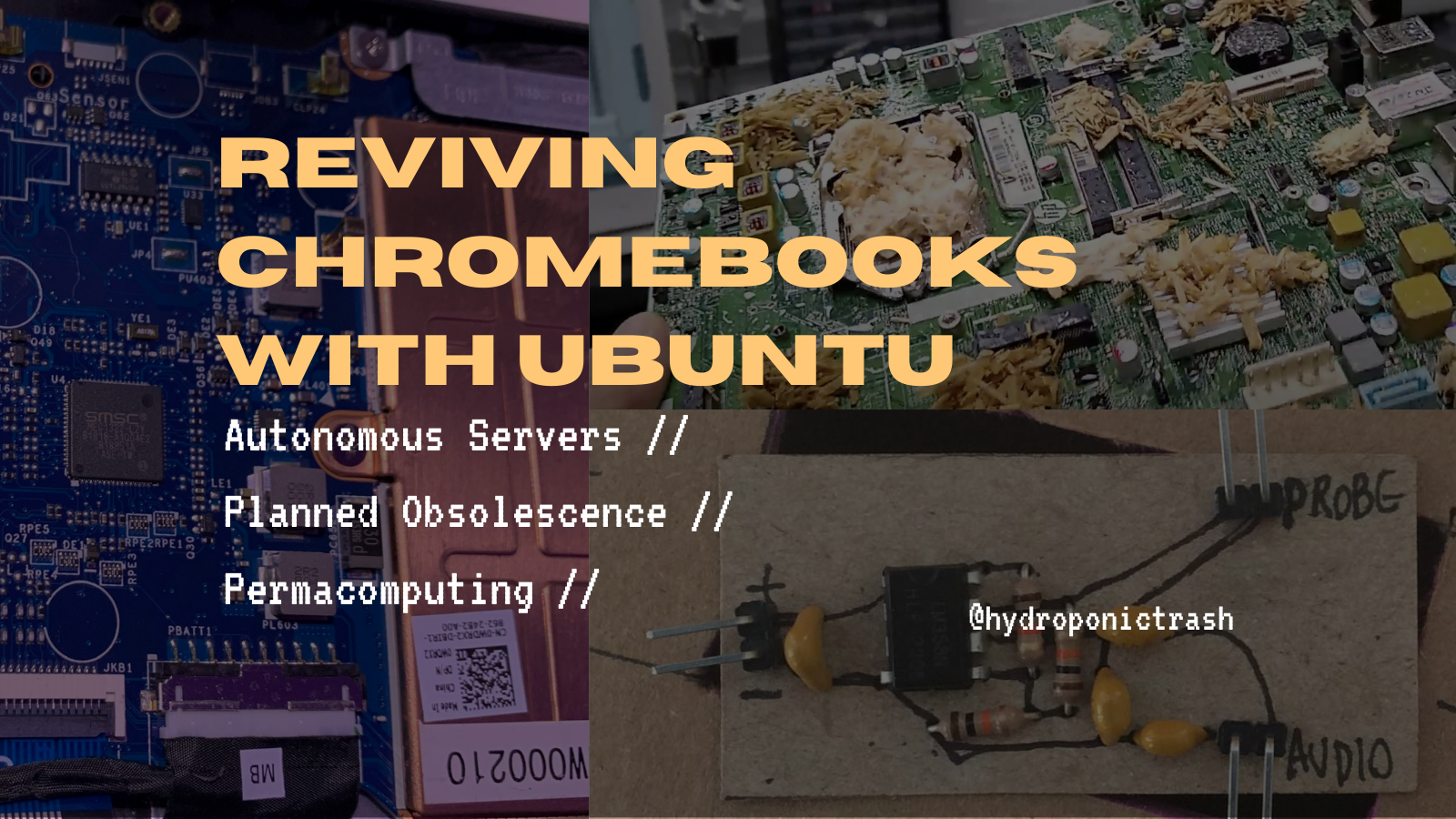
Biomimicry - Mycorrhizal fungi
Mycorrhizal fungi form a symbiotic relationship between the mycelium and the roots of host plants.
Our own resistance needs to form networks that spread, that share resources and information together. Not just within the fungal network, but to other plants and to other networks, so that means that our resistance shouldn’t stay in insulated groups, cliques, or subcultures, but spread out to our communities, our bioregions, and to the world at large.
Ideas are like spores; they spread the mycelium network by spreading, falling into places that you might not think are fertile (sometimes dangerous places), but are made to thrive and break things down. In breaking down the system, it will feed us and fuel us to grow. One spore creates a new network of resource sharing, a connected network of unity, to create more spores and spread even further.
Our networks need to be symbiotic both to each other, but also to the environment as a whole. With these mycelium-like networks cultivating a symbiotic relationship not only between humans, but the earth as well.
The only step after the system dies, is for the mycelium to come in - decompose the rot - share the resources - and allow something new to bloom.
Fractals of a Greater Pattern
I tend to write too much, trying to explain myself too much. But sometimes a picture says it all.

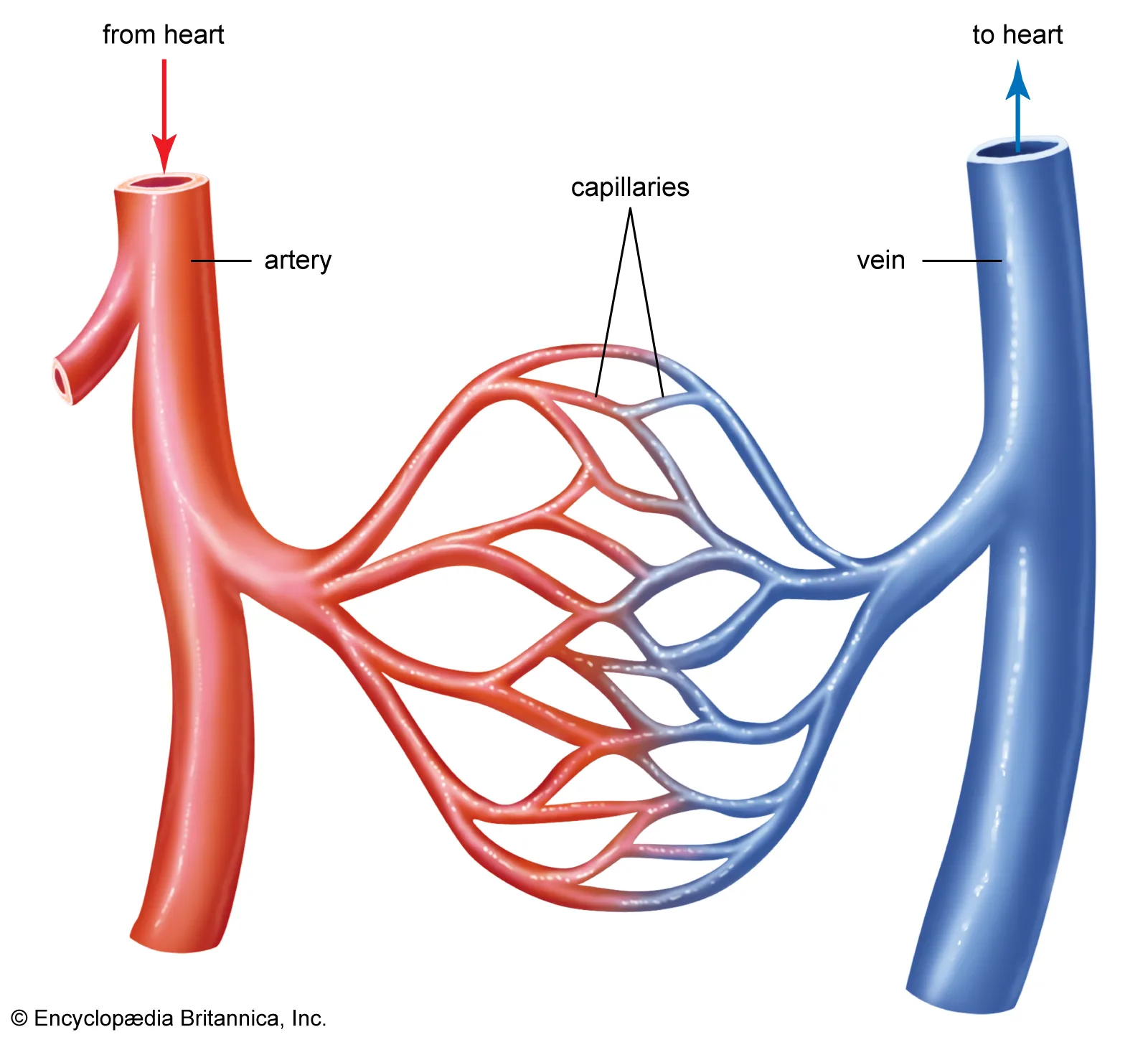
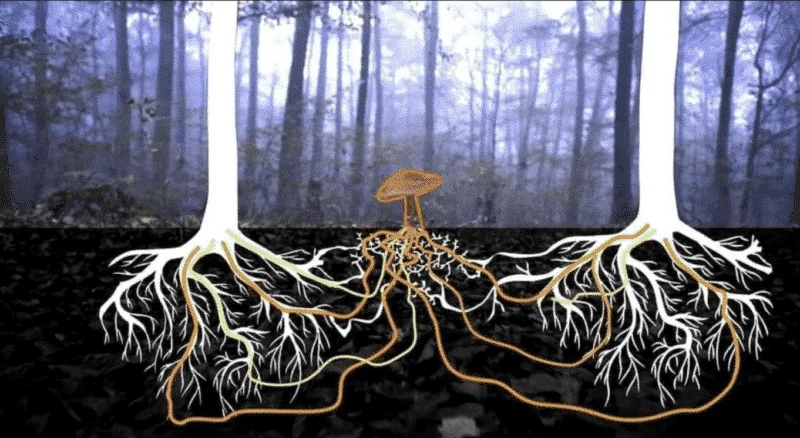
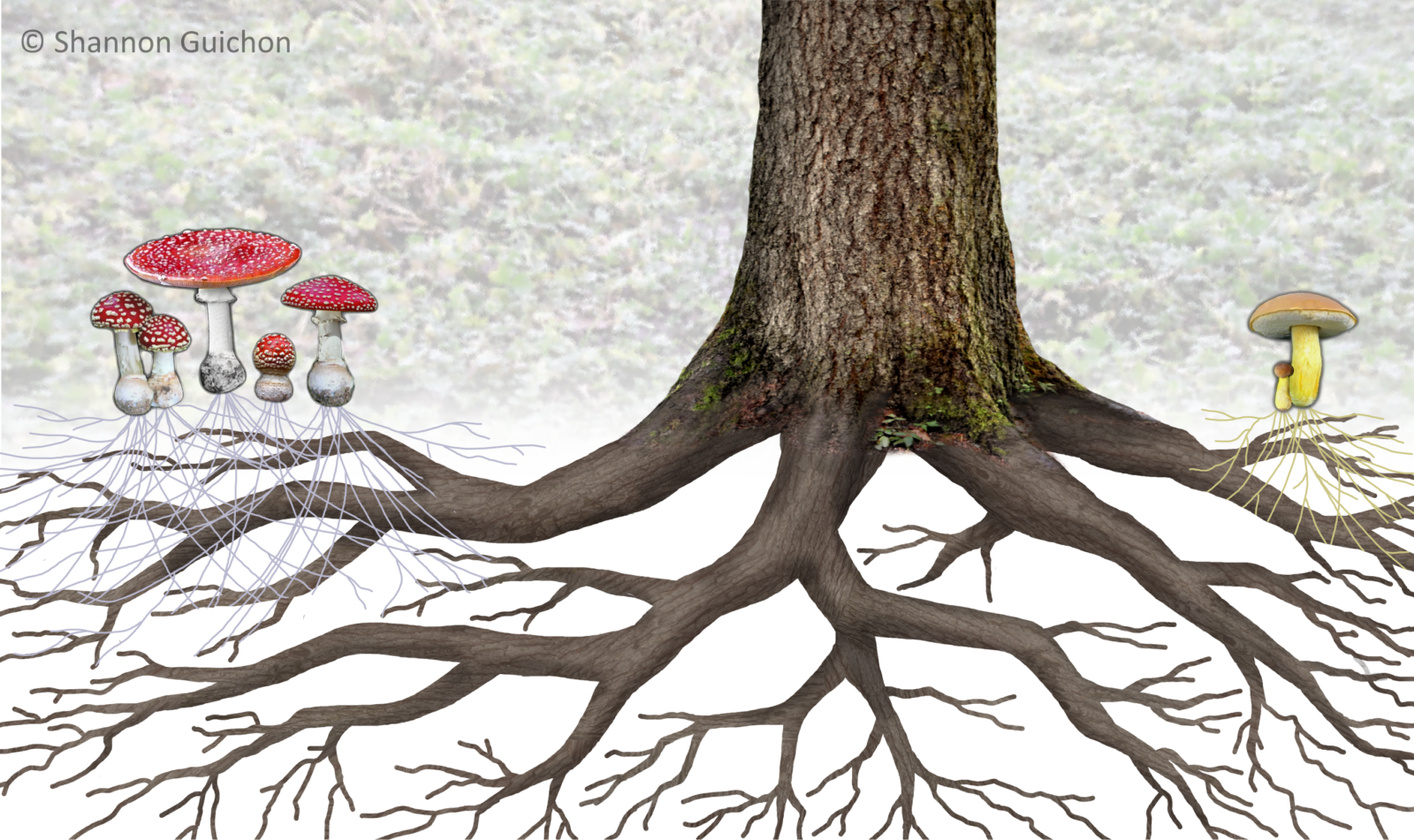
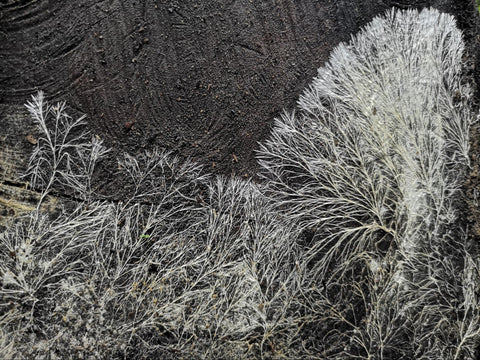
Fractals of a greater pattern